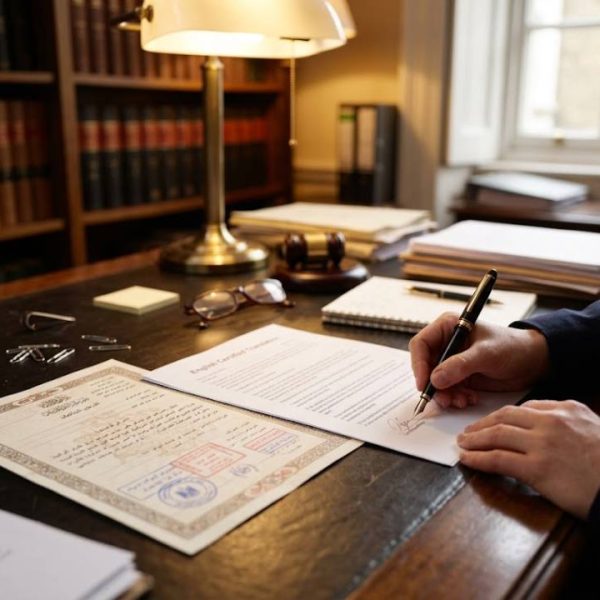
Using Arabic Documents in the UK, Certification Explained
- September 13, 2026· Article by Maria Jones
- Languages , certified translation services
Every week, people arrive at UK offices with documents written in Arabic. A marriage certificate from Cairo for a spouse visa. A degree from Riyadh for a professional registration. Company accounts from Dubai for a bank account opening. Each of these documents is perfectly valid at home, yet almost useless in the UK until it has been properly translated.
The rules can feel confusing, and mistakes lead to rejected applications and lost weeks. Knowing what each authority expects before you order a translation saves time, money and stress.
What a certified translation actually is
In the UK there is no single state register of sworn translators, unlike in France, Spain or the Gulf states. Instead, a certified translation is a translation accompanied by a signed statement from the translator or translation company. That statement confirms the translation is a true and accurate rendering of the original, and it includes the date, the translator's name and contact details.
Most government bodies, including UK Visas and Immigration, accept this format. Some organisations ask for more, such as membership of a professional body or a notarised translation. Always check the specific requirements of the receiving organisation first.
Common Arabic documents and their quirks
Arabic documents come from more than twenty countries, and each issuing authority has its own formats. Some recurring examples:
- Egyptian birth certificates are often computer printed extracts with stamps and handwritten annotations.
- Gulf marriage contracts may combine religious and civil wording and include dowry details.
- Academic transcripts from Levant universities sometimes mix Arabic and English, with grading systems that need explanation.
- Commercial registrations from the UAE include free zone references that have no direct UK equivalent.
A translator familiar with these formats will render every stamp, seal and marginal note, and will flag anything illegible rather than guessing.
Names, dates and transliteration
Arabic names are a frequent source of trouble. The same name can be written in English as Mohammed, Muhammad or Mohamed. If your passport uses one spelling and the translation uses another, a caseworker may question whether the documents relate to the same person.
Always give the translator your passport spelling for every name that appears. The same applies to place names and to dates. Some documents use the Hijri calendar, which must be converted carefully to the Gregorian date, ideally with both shown.
Legalisation and apostilles
Translation is only one step. Many authorities also want proof that the original document is genuine. For documents issued in countries that belong to the Hague Apostille Convention, an apostille from the issuing country usually does the job. Several Arab states have joined in recent years, but others have not, so their documents go through embassy legalisation instead.
The reverse also applies. If you need a UK document recognised abroad, the Foreign, Commonwealth and Development Office explains the process on its page about how to get a document legalised. Arabic speaking countries often require the UK document to be legalised first and then translated locally, or translated in the UK and the translation itself legalised.
Choosing the right provider
Not every bilingual speaker can produce a translation that will be accepted. Reliable certified translation services use qualified translators who work into their native language, follow strict formatting conventions, and stand behind their certification.
Ask a few practical questions before you order. Do they translate stamps and seals? Will they reproduce the layout so officials can compare original and translation side by side? Can they deliver electronic copies for online applications as well as signed paper copies? What happens if an authority queries the translation?
Arabic into English for business
Companies doing business between the UK and the Arab world face similar issues on a larger scale. Contracts, powers of attorney, board resolutions, trade licences and court judgments often need certified translations for banks, regulators and courts.
Legal Arabic is formal and dense, with classical expressions that do not translate neatly into English legal terminology. Accuracy here is not about elegant prose; it is about making sure obligations, deadlines and liabilities mean exactly the same thing in both languages.
Timing your application
Plan translation into your timeline from the beginning. Standard turnaround for a few personal documents is usually two to three working days, but legalisation, courier delivery and appointments can add weeks. If a visa or job offer depends on the documents, start early and keep scanned copies of everything.
Check also whether the authority wants the original translation or accepts a certified copy, and whether translations older than a certain date are still valid. Some organisations ask for translations made within the last six or twelve months.
Visa and immigration applications often require several translated documents at once. Working with professional immigration translation services means birth certificates, marriage records and police checks are all prepared to the authority's standard. One provider handling the full set keeps names and dates consistent across every page. That consistency is exactly what caseworkers look for.
Getting it right the first time
A rejected document rarely means a refusal on the merits. It usually means a technical detail was missed: a stamp left untranslated, a name spelled differently, a missing certification statement. With a careful translator and a clear understanding of the requirements, Arabic documents can move through the UK system smoothly, letting you focus on the new job, home or business they are meant to support.